
The European Union’s Carbon Border Adjustment Mechanism (CBAM) officially entered its definitive phase on 1 January 2026, marking one of the most significant policy changes affecting global manufacturers and exporters in recent years.
Although industrial valves are not currently listed as CBAM-covered products, the mechanism already impacts the upstream materials used to manufacture valves—particularly iron, steel, stainless steel, and aluminum. Since these materials account for a substantial portion of valve production, the policy is reshaping purchasing decisions, supplier evaluation, and sustainability requirements across the European industrial supply chain.
For manufacturers serving European EPC contractors, distributors, utilities, and industrial projects, understanding CBAM is becoming an important competitive advantage rather than simply a compliance issue.
The Carbon Border Adjustment Mechanism (CBAM) is the EU’s carbon pricing system for imported carbon-intensive products.
Its objective is straightforward:
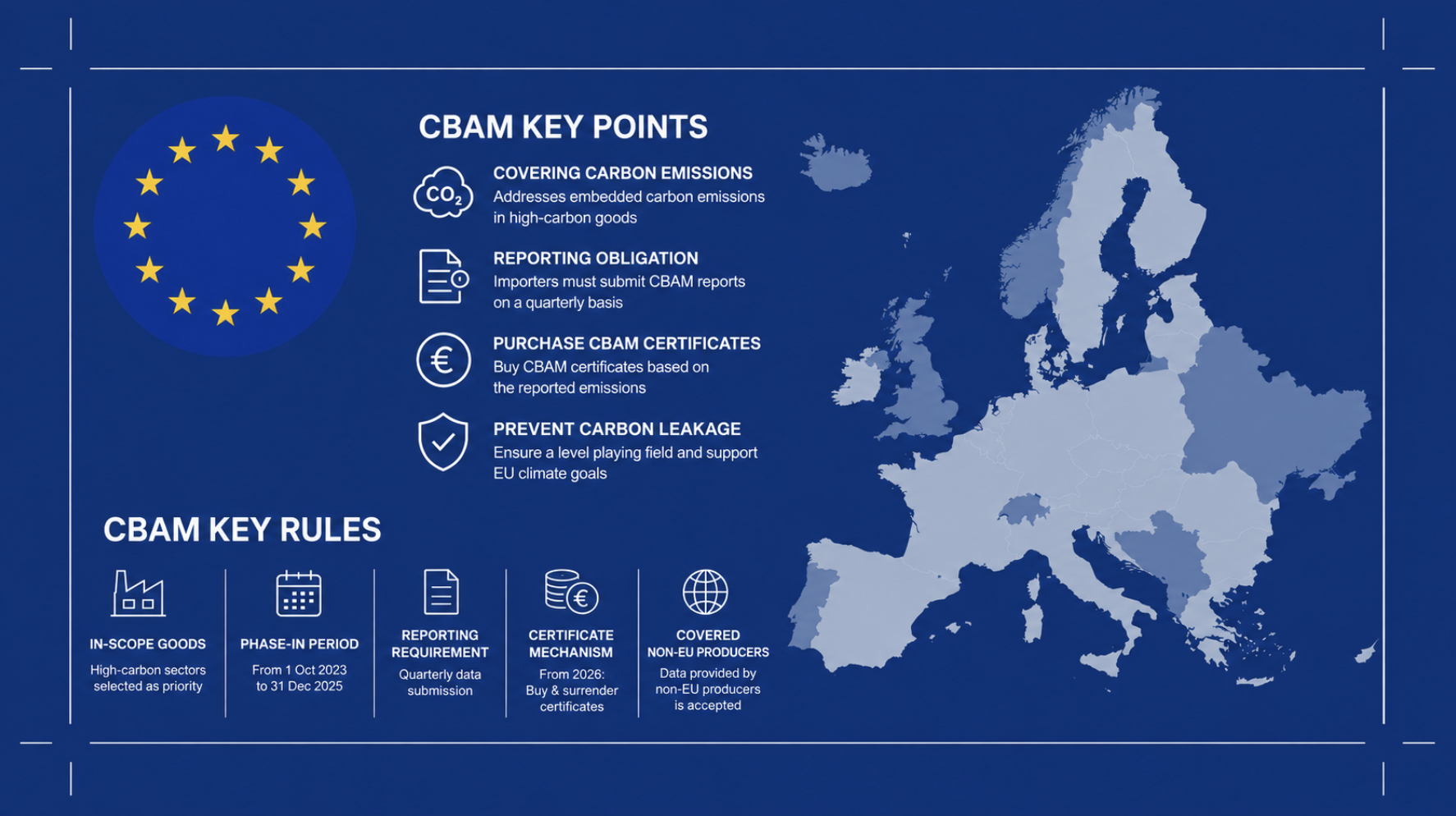
- Prevent carbon leakage
- Create fair competition between EU and overseas manufacturers
- Encourage cleaner manufacturing worldwide
- Support Europe’s climate neutrality goals
Under the definitive regime beginning in 2026, EU importers of covered products must register as authorized CBAM declarants, report embedded emissions, and gradually purchase CBAM certificates corresponding to those emissions.
Even though finished industrial valves are generally outside the first phase of CBAM, the regulation is already influencing purchasing behavior throughout Europe.
Major EPC contractors, water utilities, engineering companies, and industrial end users are increasingly requesting suppliers to provide:
- Material traceability
- Manufacturing transparency
- Environmental documentation
- Supplier sustainability information
- Carbon-related production data
This trend extends well beyond regulatory compliance—it is becoming part of supplier qualification and long-term procurement strategies.
For valve manufacturers, product quality alone is no longer enough. Customers are increasingly evaluating how products are manufactured as well as how they perform.
European buyers increasingly prefer suppliers capable of providing consistent production records, material certifications, and documented quality management systems.
Reliable documentation is becoming as important as product specifications.
Reducing material waste, improving casting yield, optimizing machining processes, and lowering energy consumption all contribute to improved production efficiency while supporting sustainability objectives.
Manufacturers investing in process optimization are likely to become more competitive over the long term.
Large infrastructure projects now frequently incorporate ESG and sustainability requirements into supplier evaluations.
Industrial buyers increasingly look for manufacturers that demonstrate:
- Stable quality systems
- Responsible manufacturing
- Long product service life
- Efficient production processes
This trend is expected to continue as Europe’s green industrial policies evolve.
At BESTOP, we view sustainability as an extension of product quality.
Rather than treating regulatory changes as challenges, we continue investing in manufacturing improvements that create long-term value for customers.
Our approach includes:
We work with qualified raw material suppliers and maintain complete inspection procedures to ensure consistent product quality.
Our production capabilities include precision casting, CNC machining, epoxy coating, pressure testing, and complete quality inspection throughout the manufacturing process.
Every valve undergoes rigorous testing before shipment, including pressure testing, leakage testing, dimensional inspection, and functional verification to ensure reliable field performance.
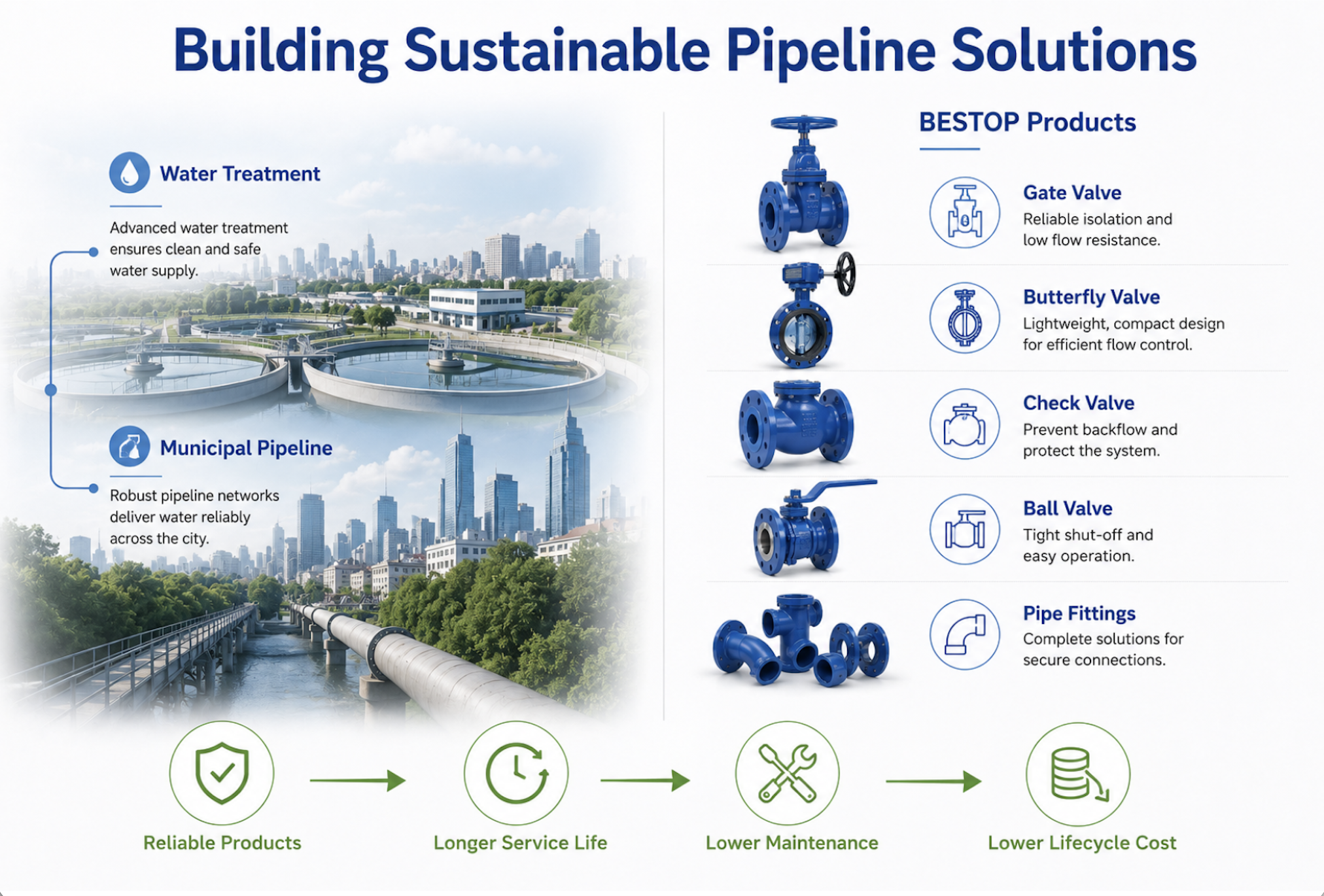
Longer service life means fewer replacements, lower maintenance requirements, and improved operational efficiency throughout the product lifecycle.
Europe’s industrial procurement is gradually shifting from a price-driven model toward one that balances quality, sustainability, traceability, and long-term value.
As environmental regulations continue to evolve, manufacturers capable of delivering reliable products alongside responsible manufacturing practices will be better positioned to serve international markets.
BESTOP remains committed to supporting customers with dependable industrial valve solutions, continuous manufacturing improvements, and transparent quality management for projects worldwide.
BESTOP is a professional manufacturer and global supplier of industrial valves, pipe fittings, pumps, and pipeline solutions. Our product portfolio includes gate valves, butterfly valves, check valves, ball valves, marine valves, fire protection products, and ductile iron pipeline components for water treatment, municipal infrastructure, fire protection, HVAC, marine, and industrial applications.
With advanced manufacturing facilities, comprehensive testing capabilities, and internationally recognized certifications, BESTOP continues to deliver reliable products and professional service to customers in more than 70 countries.
Post time: Aug-18-2026