
Introduction: A Changing Landscape for the Global Valve Industry
The global industrial valve industry entered 2026 with a changing market environment. While demand continued to grow steadily, growth was no longer driven by a single sector such as traditional oil and gas investment. Instead, infrastructure development, energy security, supply chain restructuring, industrial digitalisation and evolving procurement requirements became the major forces shaping the market.
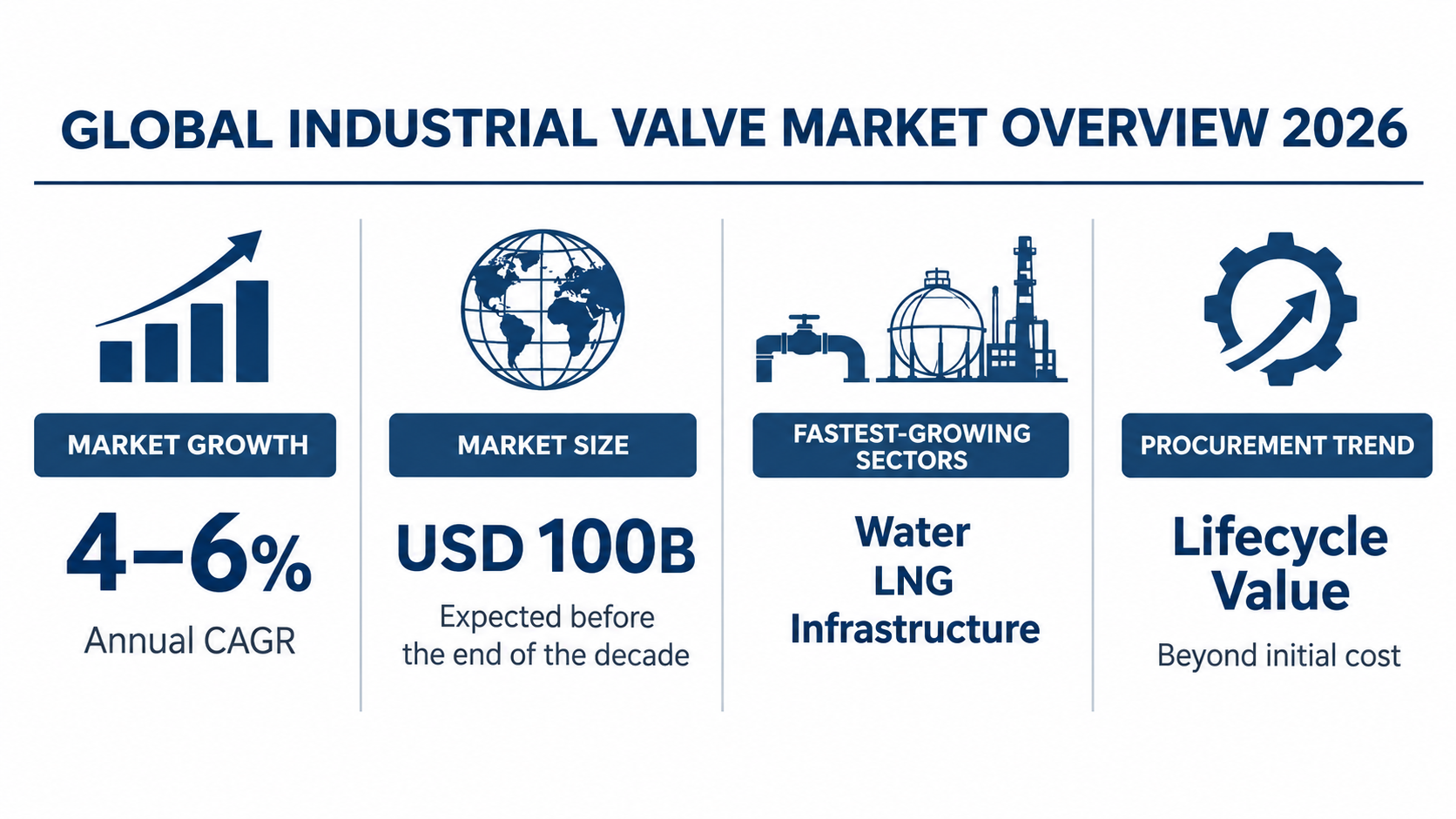
Despite geopolitical uncertainty, the global industrial valve market maintained stable expansion in 2026, with industry forecasts indicating annual growth of around 4–6%. Long-term investment in water infrastructure, LNG projects, industrial automation, power generation and energy transition continued supporting market demand.
At the same time, valve procurement is moving beyond price and product specifications. EPC contractors and industrial buyers increasingly evaluate suppliers based on manufacturing reliability, certification capability, technical support and delivery performance. The future competitive advantage will belong to suppliers capable of providing reliable products together with complete pipeline solutions and lifecycle support.
Global Industrial Valve Market at a Glance
Stable Growth Driven by Infrastructure and Industrial Investment
The global industrial valve market continued steady growth in 2026 despite economic uncertainty and changing trade conditions. Multiple industry analyses indicate that the market is expected to approach USD 100 billion before the end of the decade, with annual growth remaining within the 4–6% range.
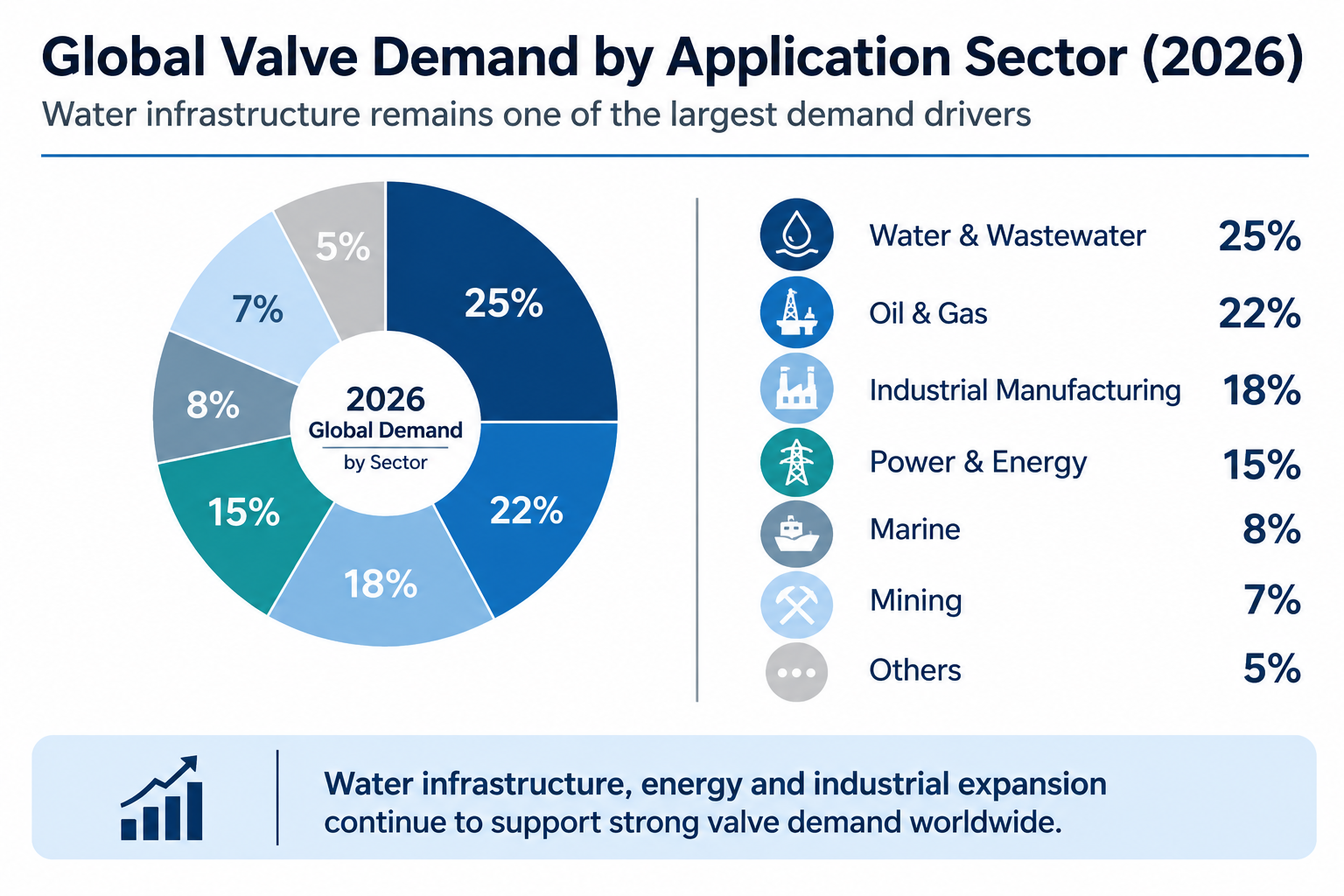
This diversified demand structure has improved market resilience. Water networks, wastewater treatment, LNG facilities and industrial automation projects are creating long-term opportunities for valve manufacturers.
5 Five Key Trends Shaping the Valve Industry in 2026
1. Water Infrastructure Remained a Stable Growth Driver
Water infrastructure continued to be one of the most resilient segments of the valve market in 2026. Urbanisation, population growth, ageing networks and increasing water security concerns supported investment in water transmission, wastewater treatment and irrigation projects.
Compared with cyclical energy projects, municipal water infrastructure generally provides more stable demand and long-term investment cycles. This supported continued demand for essential pipeline products such as butterfly valves, gate valves, check valves and air release valves.
With governments across Southeast Asia, the Middle East and other emerging regions prioritising water security and infrastructure upgrades, water-related applications are expected to remain a major growth area for valve suppliers through 2027.
2. LNG Expansion Increased Demand for Advanced Valve Solutions
Energy security remained a key driver of industrial valve demand in 2026. As countries diversified energy sources, LNG infrastructure continued expanding across North America, Europe and Asia.
According to the International Gas Union (IGU), global LNG trade reached record levels in 2025, supporting further investment in LNG export facilities, receiving terminals and related pipeline systems.
These projects require specialised valve solutions for cryogenic, high-pressure and critical isolation applications. As LNG projects become more technically demanding, suppliers with strong engineering capability, testing procedures and international certification experience are better positioned to participate in global energy infrastructure projects.
3. Digitalisation Accelerated Smart Valve Adoption
Industrial automation continued changing how valves are designed, selected and operated. Although conventional manual valves remain widely used, new projects increasingly require valves that can integrate with automated control systems.
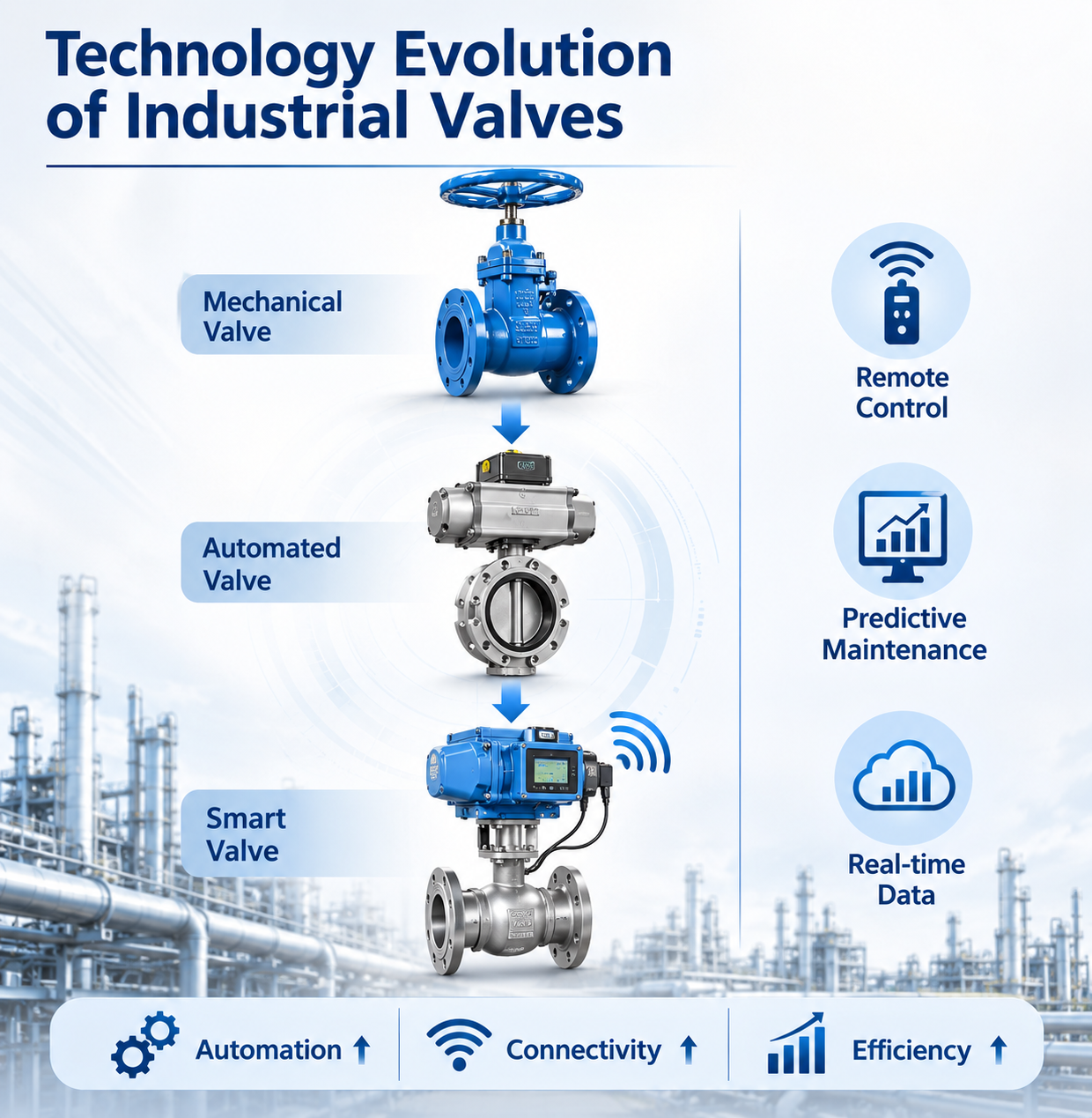
Smart valve applications are expanding through electric actuators, remote monitoring, position feedback and industrial IoT connectivity. Valves are increasingly becoming part of larger operational systems rather than standalone mechanical components.
For industrial buyers, valve selection is gradually shifting from basic product specifications toward long-term operational efficiency, automation compatibility and future digital upgrade capability.
4. Supply Chain Resilience Became a Procurement Priority
Supply chain uncertainty remained a major factor influencing industrial valve procurement in 2026. Trade policy changes, logistics disruptions and material cost fluctuations encouraged EPC contractors and industrial buyers to reconsider traditional sourcing strategies.
Rather than focusing only on purchase price, customers increasingly value suppliers with stable manufacturing capacity, transparent production processes, reliable delivery schedules and international project experience.
For large infrastructure projects, supply reliability has become closely connected with project risk management. Suppliers that can coordinate production, documentation and logistics are gaining stronger advantages in global markets.
5. Lifecycle Value Became More Important Than Initial Cost
Industrial buyers are increasingly evaluating valves based on total lifecycle value rather than initial purchase price. Factors such as installation efficiency, maintenance requirements, service life and operational reliability are becoming more important in large-scale infrastructure projects.
This shift benefits suppliers that can demonstrate consistent manufacturing quality, reliable testing processes and international compliance. As project complexity increases, customers are increasingly looking for long-term partners that can reduce operational risks rather than simply provide lower-cost products.
Regional Market Highlights:Different Regions, Different Growth Drivers
The global industrial valve market became increasingly differentiated by region in 2026. While infrastructure investment remained the common foundation, each market developed different priorities based on energy strategy, industrial development and regulatory requirements. Europe focused on sustainability and infrastructure renewal, the Middle East on energy and water security, North America on reshoring and supply chain resilience, Southeast Asia on industrial expansion, and China on higher-value global competition.
EUROPE
Europe remained one of the most demanding valve markets, driven by ageing infrastructure, energy transition and sustainability regulations. The implementation of CBAM increased attention on carbon transparency, material traceability and environmental documentation across industrial supply chains. Although valves are not directly included in CBAM categories, European buyers increasingly expect suppliers to provide sustainability-related information.
Infrastructure renewal remains a key opportunity. Around 25% of Europe’s drinking water is lost through ageing distribution networks, supporting continued investment in pipeline upgrades, leakage reduction and water management systems.
For valve suppliers, technical documentation, certification capability and supply chain transparency are becoming as important as product performance.
MIDDLE EAST
The Middle East continued to be one of the fastest-growing valve markets in 2026, supported by investment in LNG, petrochemicals, desalination and industrial infrastructure. Saudi Arabia’s Vision 2030 projects, Qatar’s LNG expansion and regional water programmes created strong demand for pipeline equipment and high-performance valves.
Water security remained a major driver, with 17 of the world’s 25 most water-stressed countries located in the Middle East, supporting long-term investment in desalination and water transmission networks.
The market is also moving toward integrated procurement, with EPC contractors increasingly preferring suppliers able to provide valves, fittings, pipes and technical support together.
NORTH AMERICA
North America benefited from infrastructure renewal, LNG investment and industrial reshoring in 2026. The US Infrastructure Investment and Jobs Act continued supporting water and wastewater projects, while LNG expansion maintained demand for advanced valve systems.
Investment in semiconductor plants, battery manufacturing and advanced industries also increased demand for industrial fluid-control solutions.
Meanwhile, changing trade policies encouraged buyers to diversify suppliers and place greater emphasis on certification, quality systems and delivery reliability.
SOUTHEAST ASIA
Southeast Asia remained one of the fastest-growing infrastructure regions, supported by urbanisation, manufacturing relocation and industrial investment. Indonesia, Vietnam and the Philippines continued expanding industrial parks, water projects and public infrastructure. 2026
Although price competitiveness remains important, buyers increasingly require suppliers that can combine cost efficiency with technical support, flexible delivery and broader product capabilities.
CHINA
China continued to be one of the world’s largest valve manufacturing bases in 2026. However, export competitiveness is gradually shifting from low-cost production toward quality, certification and project capability.
Demand from water infrastructure, LNG, petrochemicals and advanced manufacturing supported industrial output, while manufacturers expanded overseas markets through improved automation, quality management and international certification.
Major Industry Events Shaping the Market in 2026
- ●
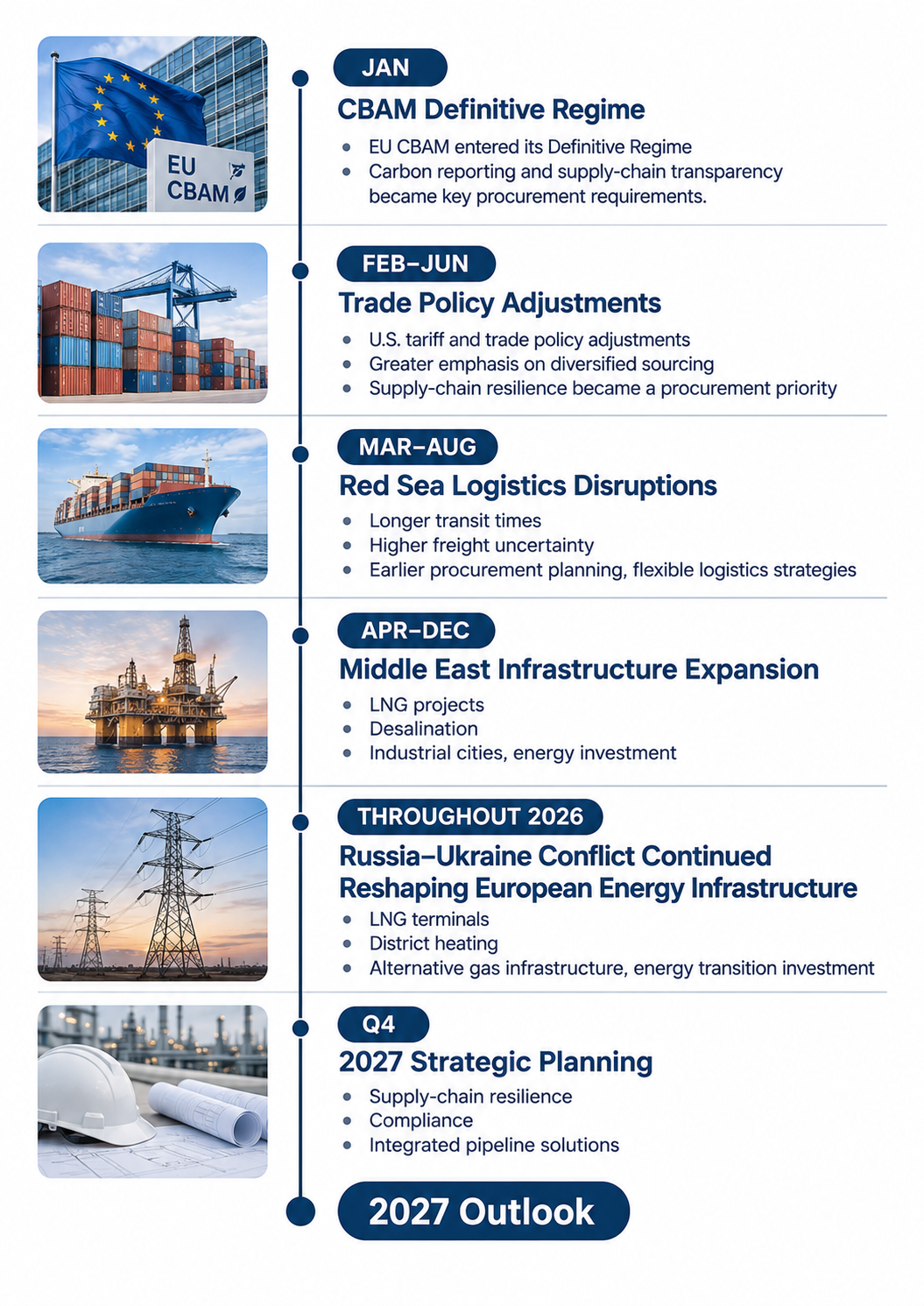
CBAM Increased Supply Chain Transparency Requirements
The EU entered the financial implementation phase of CBAM on 1 January 2026, increasing attention on carbon-related information and supply chain transparency. Although industrial valves are not directly included, suppliers serving energy, steel and infrastructure projects are increasingly expected to provide material traceability and environmental documentation.
- ●
US Trade Policies Accelerated Supply Chain Diversification
Changes in US tariff policies affected industries using metal-based products, including valves manufactured from ductile iron, carbon steel and stainless steel. Buyers responded by increasing supplier diversification, improving qualification processes and reducing dependence on single-source procurement.
- ● Red Sea Disruptions Highlighted Logistics Capability
-
Shipping risks around the Red Sea continued influencing global equipment supply chains. The Suez Canal normally handles around 12% of global trade volume, making route disruptions highly significant for industrial suppliers.
For valve suppliers, delivery planning, logistics coordination and inventory flexibility became increasingly important factors in international projects.
- ●
Russia–Ukraine War Continued Reshaping Energy Investment
-
The Russia–Ukraine conflict remained a major factor influencing global energy strategies in 2026. Europe’s continued effort to reduce dependence on Russian pipeline gas accelerated investment in LNG terminals, alternative energy routes and energy infrastructure upgrades.
For the valve industry, this shift supported ongoing demand for LNG facilities, gas transmission systems and pipeline projects requiring reliable flow-control solutions. At the same time, geopolitical uncertainty encouraged EPC contractors and industrial buyers to place greater emphasis on supply chain resilience, diversified sourcing and supplier reliability.
Looking ahead, the conflict will continue influencing energy security strategies, infrastructure investment and procurement decisions, particularly across Europe and neighbouring regions.
-
●
Energy Security Supported LNG Infrastructure Growth
-
The Russia–Ukraine conflict continued reshaping Europe’s energy strategy, accelerating LNG infrastructure development and diversification of energy supply routes. This created continued demand for high-performance valves used in LNG terminals, gas, transmission systems and energy infrastructure.
Technology and Procurement Trends
Smart Valves and Industrial Digitalisation
Industrial valves are increasingly becoming part of digital control systems rather than standalone components. New projects increasingly require automation-ready designs, including electric actuators, remote monitoring and integration with SCADA/PLC systems.
AI-Based Predictive Maintenance
Predictive maintenance continued gaining attention in 2026 as industrial operators used sensor data to monitor pressure, temperature, leakage and actuator performance. Digital valve systems help improve reliability and reduce maintenance risks throughout the equipment lifecycle.
Low-Carbon Manufacturing
Environmental performance became an increasingly important supplier evaluation factor. Carbon management, material traceability and environmental documentation are becoming part of international procurement requirements.
Integrated Procurement and One-Stop Solutions
Large projects are increasingly moving from purchasing individual components toward integrated pipeline procurement. Suppliers capable of coordinating valves, pipes, fittings, flanges and related products can help customers reduce procurement complexity and improve project efficiency.
2027 Market Outlook: Opportunities and Challenges for the Valve Industry
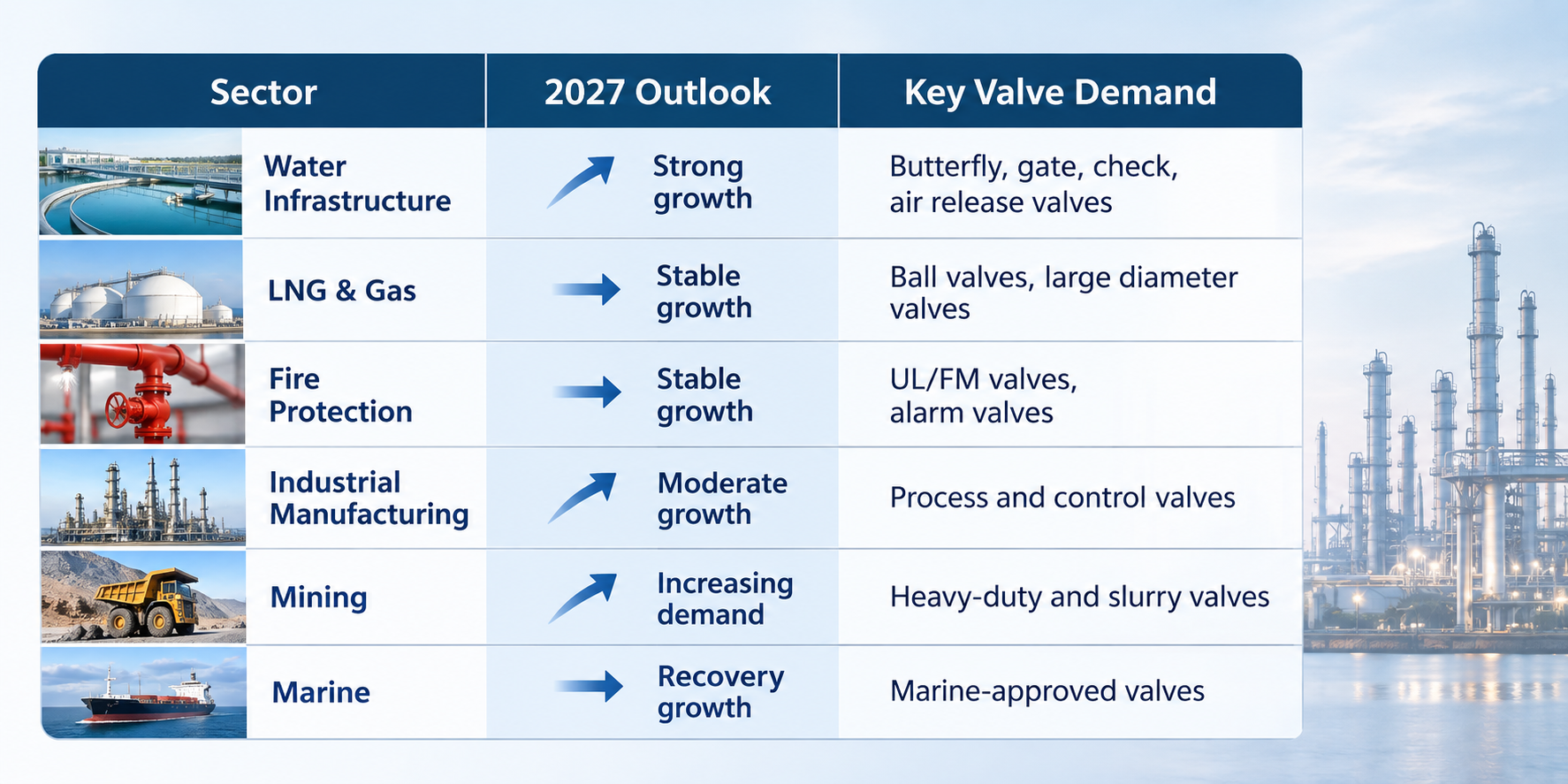
The global industrial valve market is expected to maintain steady growth in 2027, supported by continued investment in infrastructure, energy security, water management and industrial automation. However, future growth will become increasingly selective, with opportunities concentrated in regions, industries and suppliers that can adapt to changing procurement requirements.
While overall market demand remains positive, companies will face increasing pressure from regulatory changes, supply chain uncertainty and higher technical expectations. The ability to provide reliable products, international compliance and integrated project support will become increasingly important in global competition.
Continued Growth Driven by Infrastructure, Energy and Industrial Applications
In 2027, water infrastructure is expected to remain one of the most stable demand areas for industrial valves. Ageing municipal networks, wastewater treatment requirements and water security investments will continue supporting demand for pipeline valves and related products, particularly in emerging markets and regions facing water stress.
Energy infrastructure will remain another important growth driver. LNG development, gas transmission projects and energy diversification strategies will continue creating opportunities for high-performance valves used in demanding applications. At the same time, industrial automation and digital transformation will accelerate demand for smart valves and automated flow-control solutions.
Regional Opportunities Will Become More Differentiated
Future growth opportunities will vary significantly by region.
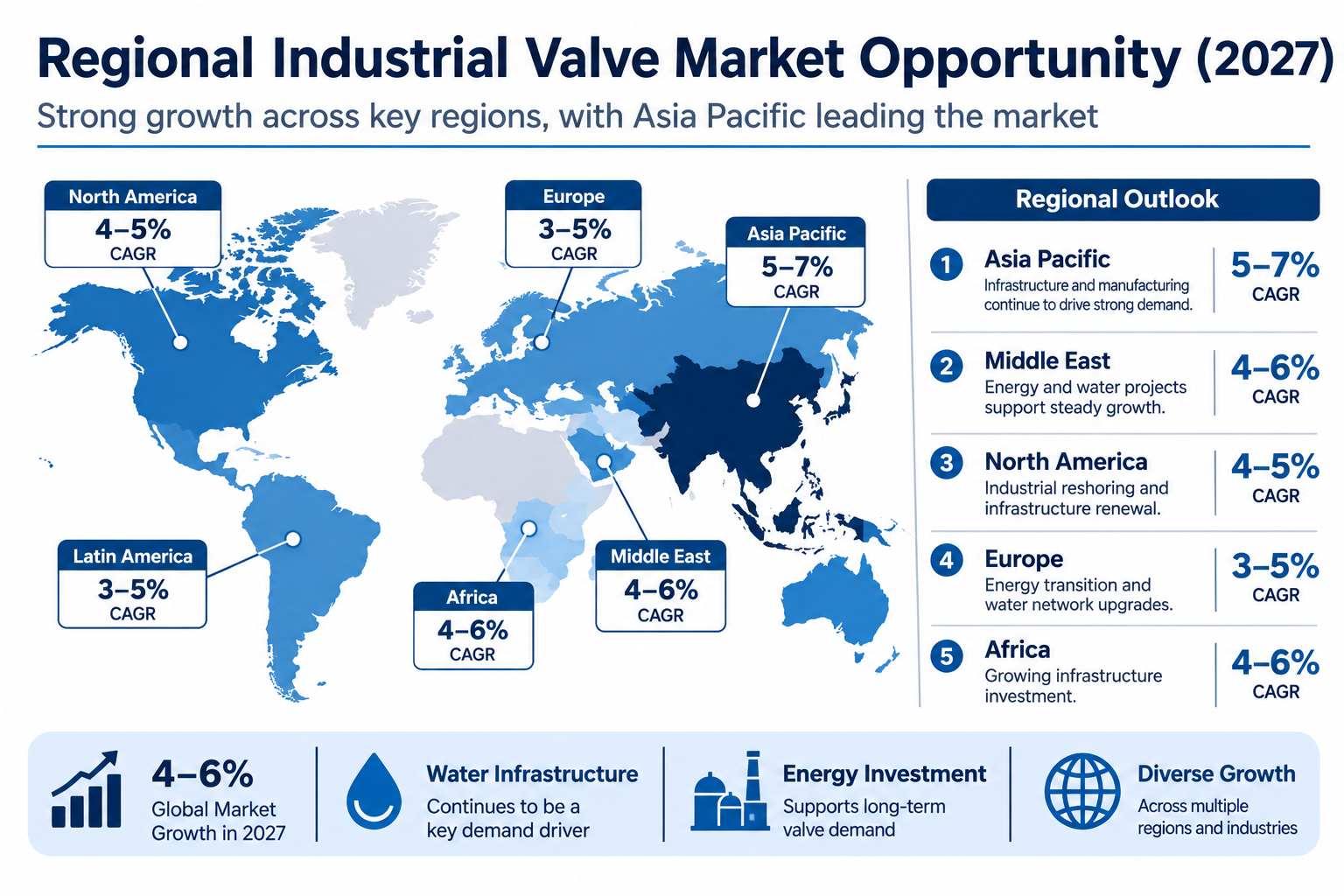
The Middle East is expected to remain a high-potential market due to continued investment in LNG, petrochemicals, desalination and large-scale infrastructure projects. Water security and industrial diversification programmes will continue supporting long-term demand.
Southeast Asia will benefit from manufacturing expansion, urbanisation and infrastructure development. Countries such as Indonesia, Vietnam and the Philippines are expected to continue investing in industrial facilities, water systems and public infrastructure.
North America will continue focusing on infrastructure renewal, LNG projects and domestic manufacturing investment, while buyers are expected to place greater emphasis on supply chain reliability and certification capability.
Europe will remain a technically demanding market, where sustainability requirements, carbon transparency and infrastructure modernisation will influence supplier selection.
For global valve suppliers, regional adaptation will become increasingly important. Different markets will require different combinations of certifications, technical standards, delivery capability and product solutions.
Product Trends: From Traditional Valves to Intelligent Flow Control
The valve market is gradually moving from traditional mechanical products toward more intelligent and integrated solutions.
Conventional valves such as butterfly valves, gate valves and check valves will continue to represent significant demand, particularly in water, infrastructure and industrial applications. However, future projects will increasingly require valves that can support automation, remote monitoring and digital management.
Smart valves, electric actuators and condition-monitoring technologies will become more common as industrial operators seek to improve efficiency and reduce maintenance risks. Predictive maintenance based on sensor data and digital monitoring is expected to play a larger role in asset management.
For manufacturers, this means future competitiveness will depend not only on manufacturing capability but also on engineering support, automation compatibility and the ability to provide complete solutions.
Key Risks: Regulation, Logistics and Market Uncertainty
Despite positive growth expectations, the valve industry will continue facing several challenges in 2027.
Regulatory requirements will become more complex, especially regarding carbon emissions, environmental documentation and supply chain transparency. Regulations such as CBAM will indirectly influence industrial procurement by increasing expectations for traceability and sustainability information.
Supply chain uncertainty will remain another challenge. Geopolitical risks, trade policy changes and logistics disruptions can affect material costs, transportation schedules and project execution. As a result, buyers are likely to continue diversifying suppliers and prioritising companies with stable production and delivery capabilities.
What This Means for Global Valve Manufacturers
The industrial valve market is entering a new stage where competition is no longer based only on manufacturing capacity or price advantages. Customers are increasingly looking for suppliers that can provide reliability, compliance, technical support and long-term project value.
For valve manufacturers, future success will depend on several capabilities: maintaining consistent product quality, supporting international standards, improving supply chain flexibility and expanding from individual product supply toward integrated pipeline solutions.
As infrastructure projects become larger and more complex, suppliers that can combine valves with related products, technical services and project coordination will have stronger opportunities in global markets. The industry is moving from component supply toward solution-based partnerships.
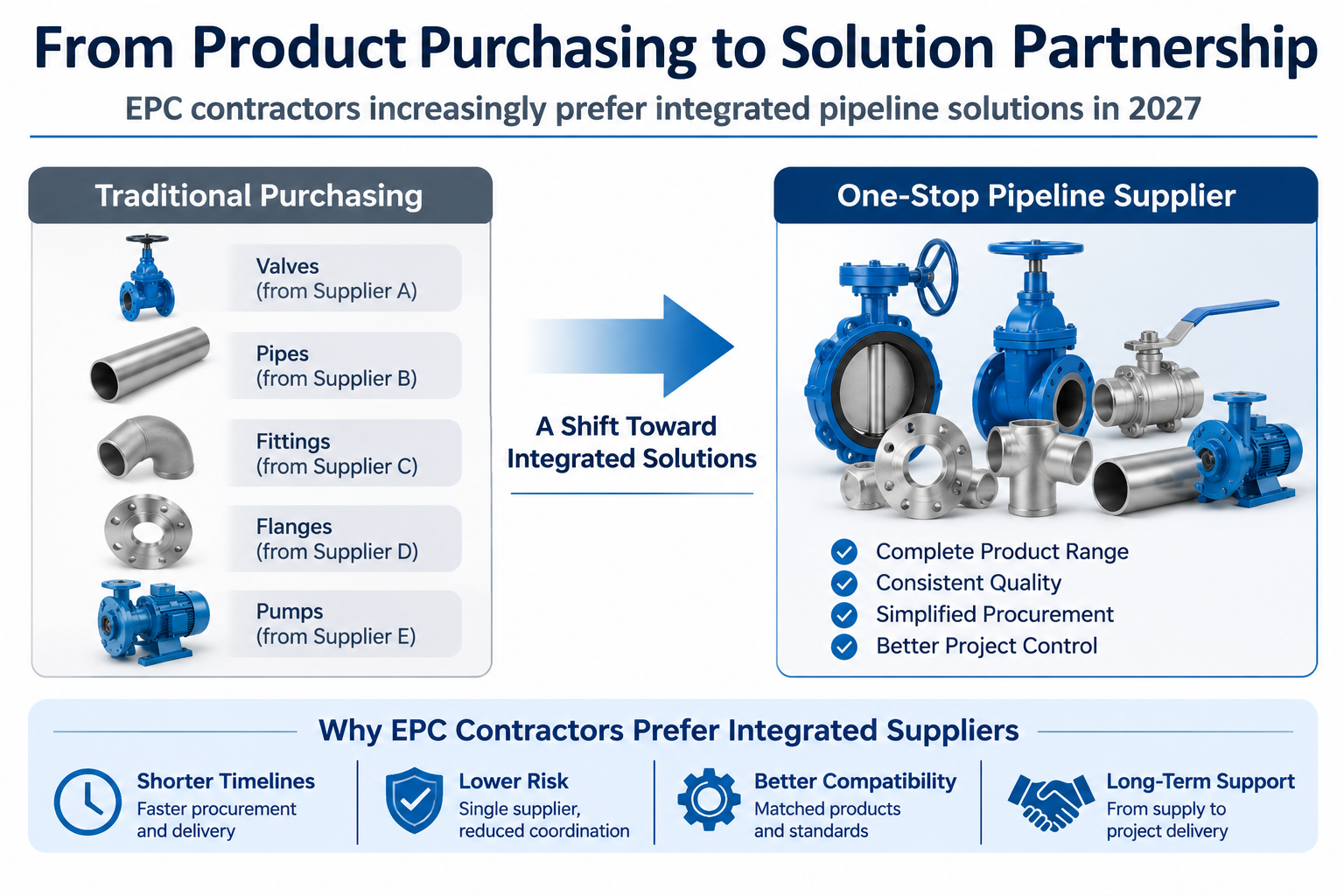
BESTOP Perspectives: As global infrastructure investment continues evolving, valve suppliers need to support customers beyond product delivery. International projects increasingly require reliable manufacturing, comprehensive documentation, flexible supply capability and experience with different technical standards.
With manufacturing capability covering valves, fittings and related pipeline products, together with experience supporting international markets, BESTOP continues focusing on providing integrated pipeline solutions for industries including water supply, fire protection, energy, marine, mining and infrastructure.
The future of the valve industry will belong to suppliers that combine quality, reliability and global service capability. By supporting customers throughout the project lifecycle, valve manufacturers can create long-term value in an increasingly competitive global market.
Market Insights Q&A
- • How big is the global industrial valve market in 2026?
- • What industries are driving valve demand?
- • Which regions offer the biggest opportunities for valve suppliers?
- • How has CBAM affected industrial valve procurement?
- • What trends will shape the valve market in 2027?
- • What should EPC contractors look for in valve suppliers?
Post time: Nov-12-2026